
Showcase 3:
Glucose Monitoring Ring
The Dental Handpiece is very personal to me! For 4 years I have been on braces, and someone who has had braces will attest of the challenges one goes through at the Dental clinic. The core instrument that rectifies your teeth and that needs steady hands, pressure, and precision is so hard to use. Dental clinicians even drop them a number of times.
My Story: Dental Handpiece
The idea of the Dental Handpiece is written in pain!
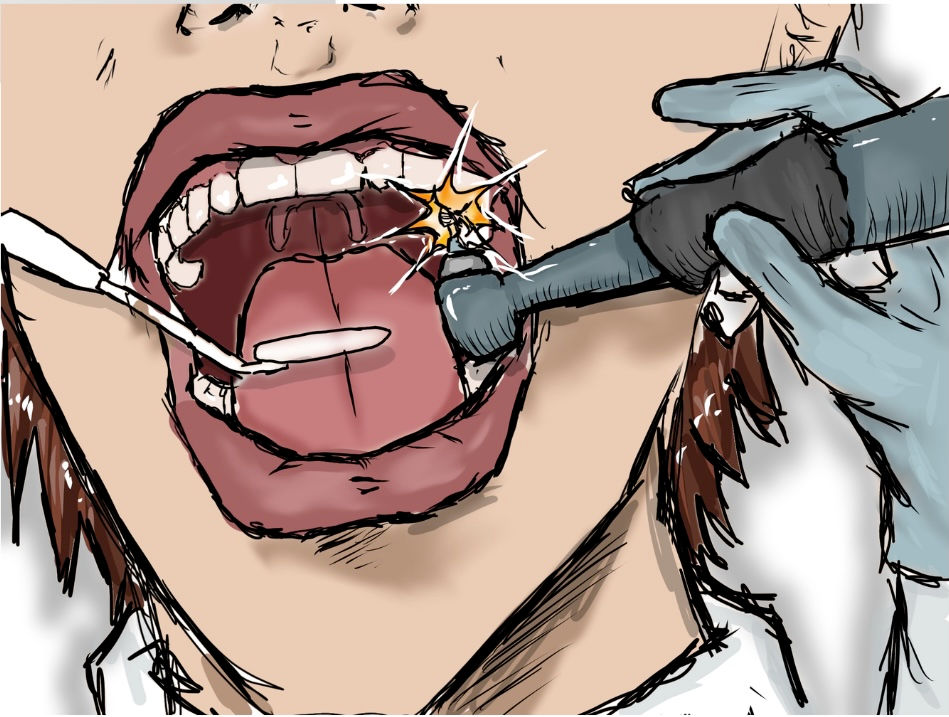
Imagine you are sitting on the Dental operating chair with your mouth forced wide open, and stretched? The dentist approaches you with the formidable dental handpiece, poking around your teeth, you cannot see it but feel it and the pressure rise and falls without notice and the only way you can call to attention is to wave, ( and you have no anesthetic), and then it happens, the handpiece slips, scrapes your lips on its way downward, and bounces on the floor.
That was the start of the journey! 80% of all the dental appointments had at least one issue of the handpiece flying over.
The Total Solution Video
(scroll for the development process)
A deep dive into the mechanical architecture and fluid dynamics of our high-speed dental turbine. This showcase highlights the iterative CAD development and thermal management strategies that enable sustained sub-millimeter precision under load.

The Drawing Board
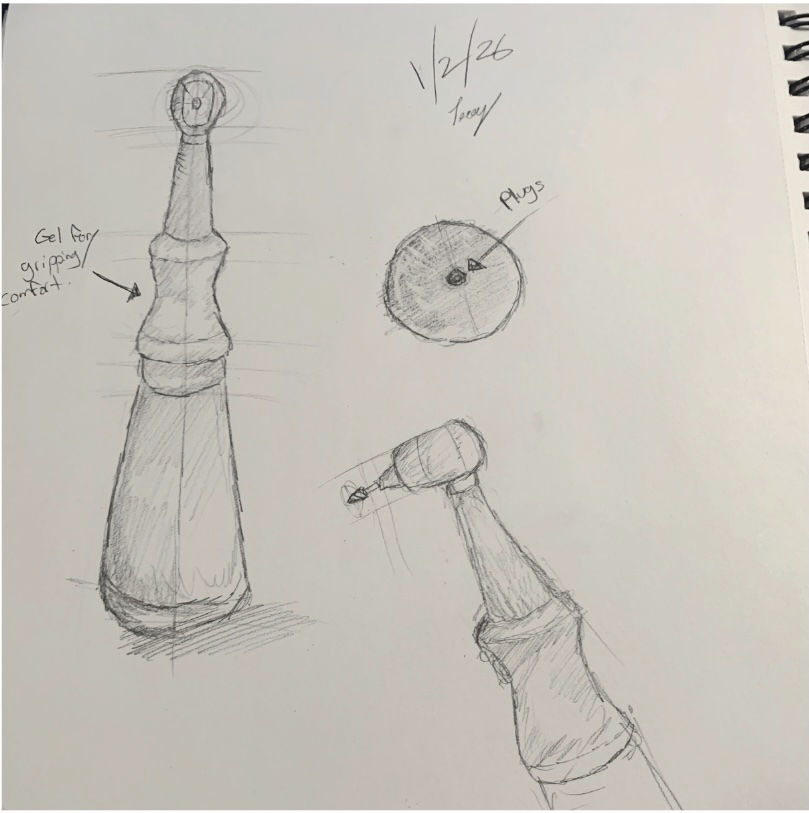
This was how I started. From Sketch, to CAD
Design Challenge
- I did not know how a Dental handpiece works. I have only seen it from outside. All of them look work out really.
- The slippery element was key
- What was important to me is the sudden pressure that is applied by the technician without a cushion of the force. The Uniformity is entirely lacking.

Process & Development
Research & Insights
Conducted extensive market analysis and user interviews to identify core functional requirements. Key insights focused on ergonomic failures in existing industrial tools.
Concepts & Prototyping
Iterative sketching followed by high-fidelity 3D modeling. Developed three distinct form factors for initial user feedback and mechanical feasibility checks.
Engineering Decisions
Selected lightweight carbon fiber composites for the chassis to maximize strength-to-weight ratio. Optimized the internal sensor array for sub-millimeter precision.
Testing & Iteration
Rigorous stress testing in lab environments and field trials. Refined the grip texture and button haptics based on real-world operator performance data.


Time Invested
100 Hours
CORE SKILLS
SolidWorks CAD
FEA Analysis
Thermal Dynamics
Rapid Prototyping